
HARNESSING THE POWER OF THE SUN
The use of solar power for pumping irrigation water holds immense benefits for Egyptian farmers. Solar pumps save money as now diesel purchases are needed. They also diminish air, soil, and water pollution and help to cut CO2 emissions to combat climate change. Most Egyptian farmers still rely on individual diesel powered pumps. These pumps cause noise, soil, and water pollution, and are prone to technical failures. Figures and 1 and 2 show such pumps in operation.
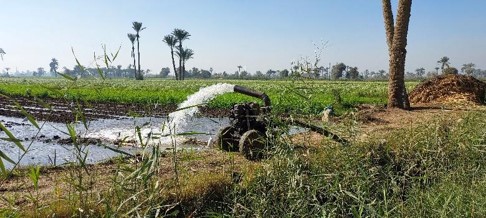
Figure 1: Diesel powered pump irrigating a field in Fayoum oasis.
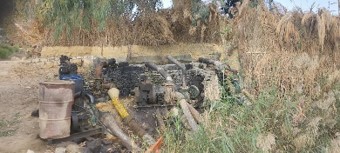
Figure 2: “Messy” pile of individually-owned irrigation pumps in an Egyptian village.
TOWARDS SCALING SOLAR PUMPING IN EGYPT
Although beneficial, for many smallholder farmers investing in a solar powered irrigation system is too expensive. Lack of access to technology, land, and know-how of operating and troubleshooting a solar system represent additional caveats.
Enabling a large-scale shift towards solar irrigation in Egypt requires a better understanding of farmer experiences. What benefits do farmers who have a solar powered irrigation system report in comparison to those who do not? What informs farmer decisions to shift to solar powered irrigation? Answers to these questions are paramount for creating enabling technology, policy, and funding environments for solar irrigation.
CGIAR’s International Food Policy Research Institute (IFPRI) partnered with GEBAL on a project aimed at enhancing agricultural production and productivity in the horticulture sector by improving farmers’ access to water. The project targeted underserved rural communities and aimed to enhance the sustainability of rural livelihoods, water use, and food production. With funding from the Japanese Government, the project partners installed solar PV systems using Sharp panels to enable the solar irrigation of horticultural fields.
PILOT PROJECTS IN RURAL EGYPT
As IFPRI’s implementing partner, GEBAL oversaw the technical part of the project. To select appropriate locations for the systems, GEBAL visited 100 communities across the governorates of Fayoum and Beni Sueif. The selection criteria were clear: Each system should serve at least 50 acres of land, benefit 20–35 farmers, and replace irrigation systems currently powered by Diesel pumps. Out of 35 communities selected through a randomization process, 28 were targeted for system installation.
In a bid to generate better understanding of what really drives the shift to solar irrigation in Egypt, participating communities took part in a randomized control trial. This trial systematically assessed the experiences of farmers owning a solar system against those who do not. Not all farmers agreed to the installation of solar panels on their land. Among the 11 selected communities in Fayoum, 8 agreed to the installation, while in Beni Suief, only 11 out of 24 communities consented to the intervention. The biggest challenge GEBAL faced was to find landowners willing to donate or rent out land that could accommodate the panels. Moving from an individually-driven to a shared irrigation system presented an additional challenge. GEBAL tackled this challenge through community meetings and collaboration.
To date, 17 systems have been successfully rolled out. These systems serve over 500 acres of agricultural land operated by around 350 individual smallholder farmers. Each installed 8.25 kW system contains 15 SHARP bifacial PV panels. These power a 4.5 kW irrigation pump, obliterating all need for the use of Diesel for irrigation during daytime (Figures 3 and 4). Steel cages protect the pumps from theft. GEBAL trained its local community partners on how to operate, manage, and troubleshoot the system’s technology.

Figure 3: Solar system being installed in Fayoum, Garado Village.

Figure 4: Solar system with pump in steel cage in Fayoum, Youssef El Sedeek Village.
MEASURING IMPACT
All installation plots are located on “old lands”. While on desert land solar pumping has become more common, farmers on Egypt’s “old lands” (the Nile Valle and Delta) are still used to Diesel pumps. Five of the installed systems receive their water from shallow groundwater wells, the other twelve from freshwater canals. The project replaced a total of 80 individual Diesel pumps and is estimated to save 138 tons of CO2 per year.
Community members overwhelmingly welcome the shift to renewable energy. The following quotes capture their enthusiasm:
“This is the best thing that has happened to us in years, especially after the diesel prices have been increasing in the last years.”
“We did not recognize how loud the diesel pumps were, until we tried the solar-energy driven ones.”
“These new pumps are very easy to operate, we just press the button and they start to pump.”
“These pumps are very clean and cheap to operate, if compared to the diesel ones.”
“Now, we all use one solar-energy driven pump, in the past years every two farmers used to share a pump. Sometimes, we have around 10 diesel pumps that are waiting for their turn to pump.”
The project demonstrates that solar powered pumping has immense potential to enhance low carbon emission agriculture in Egypt. This will render local food systems more viable and climate resilient. IFPRI’s assessments will reveal how best to scale the installed systems and make the technology more available to smallholder farmers across Egypt.


0 Comments