
INTEGRATED COMMUNITY SOLUTIONS TO SUPPORT LIVELIHOODS
GEBAL delivered a community-oriented solar-powered engineering solution to Sadqa Village to tackle three urgent problems: unreliable irrigation water, air pollution from burning crop residues, and limited local capacity for technical operation and maintenance. The project connects solar PV power to irrigation, water lifting, and composting to improve farming, strengthen infrastructure, reduce pollution, and build resilience against irrigation water scarcity.
WHY SADQA VILLAGE?
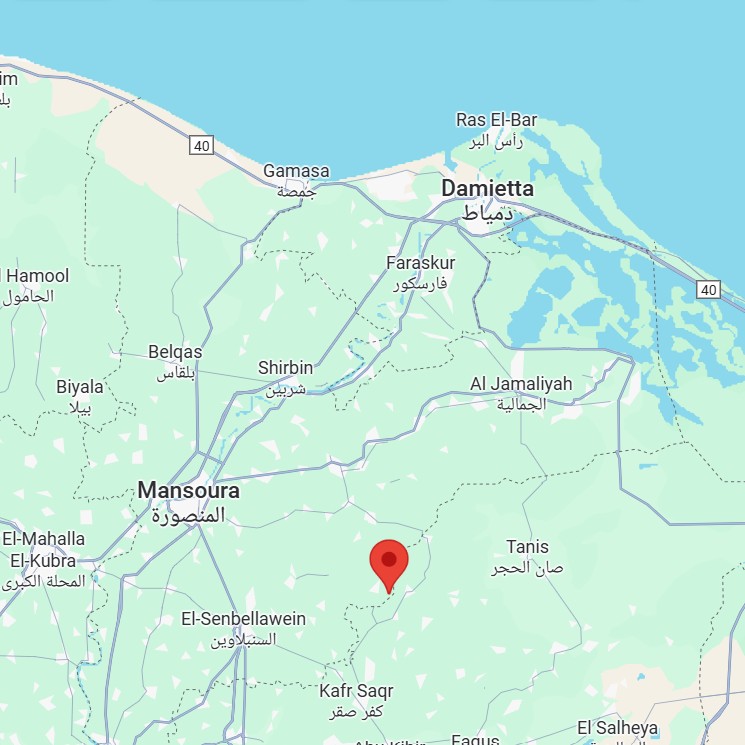
Sadqa is located at the very end of a branch canal that takes water from a main canal. Water reaching that position is often not enough to serve every field along the branch. That left the village vulnerable and without reliable water access. After field visits and community meetings, GEBAL designed a solution tailored to this specific context.
A DESIGN MADE FOR THE COMMUNITY
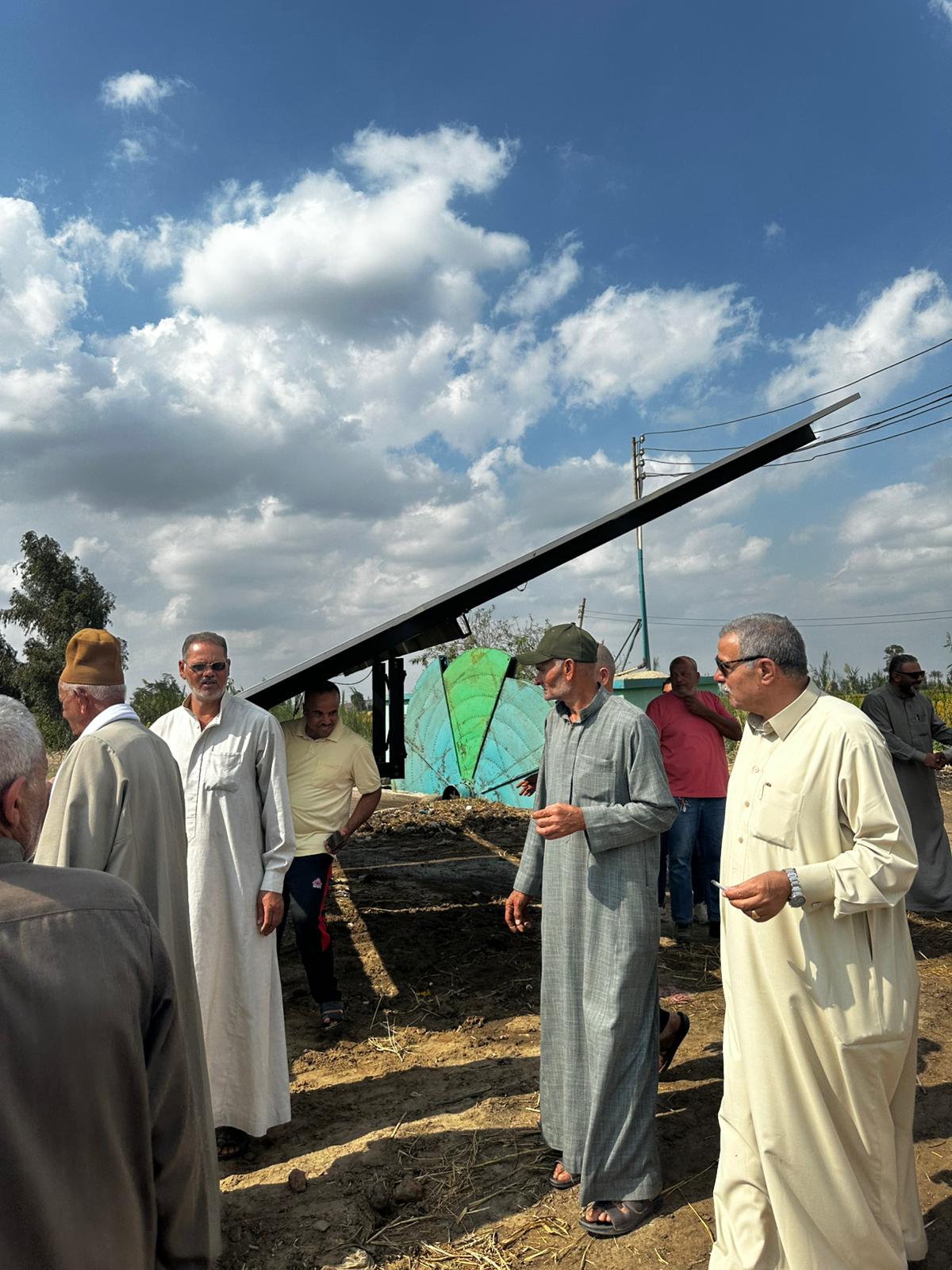
GEBAL installed five modular PV units that match the motors and equipment already used by farmers:
- Two PV systems connected to the traditional sakias. Each sakia irrigates 60 to 70 feddans, lifts about 1,000 cubic meters of water per hour, and operates around 6 to 7 hours per day.
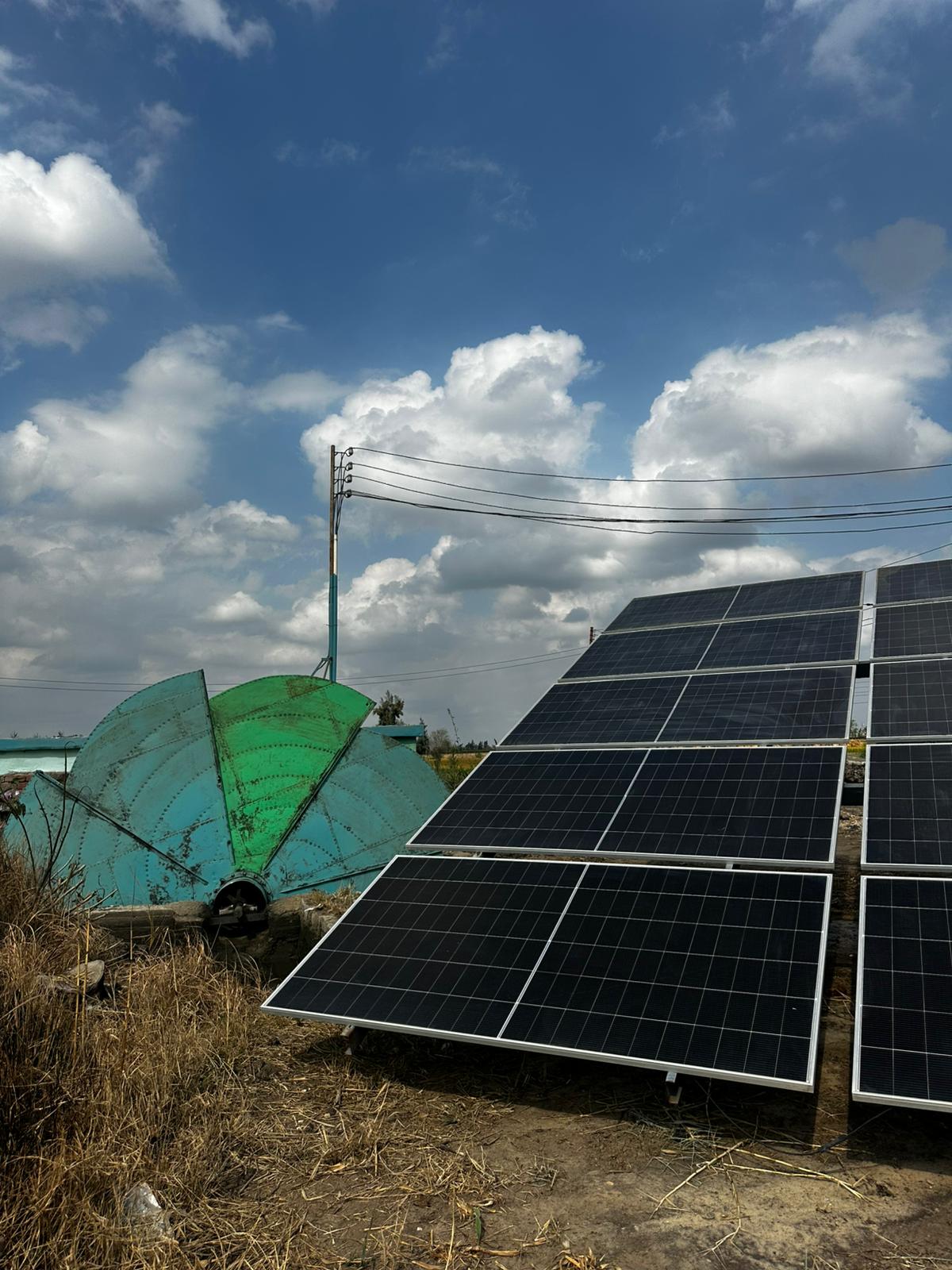
- Together, the two sakias deliver roughly 12,000 to 14,000 cubic meters daily, irrigating about 240 feddan and serving at least 100 farmers.
- One 40 HP PV pumping unit on Hados Drain that lifts about 7,000 cubic meters per day into the canal, extending water access to around 2,000 feddans and about 2,100 farmers.
- Two 20 kW PV units for the compost line, powering a 20 HP shredder with a capacity above 100 tons per day and a 20 HP baler with similar throughput.
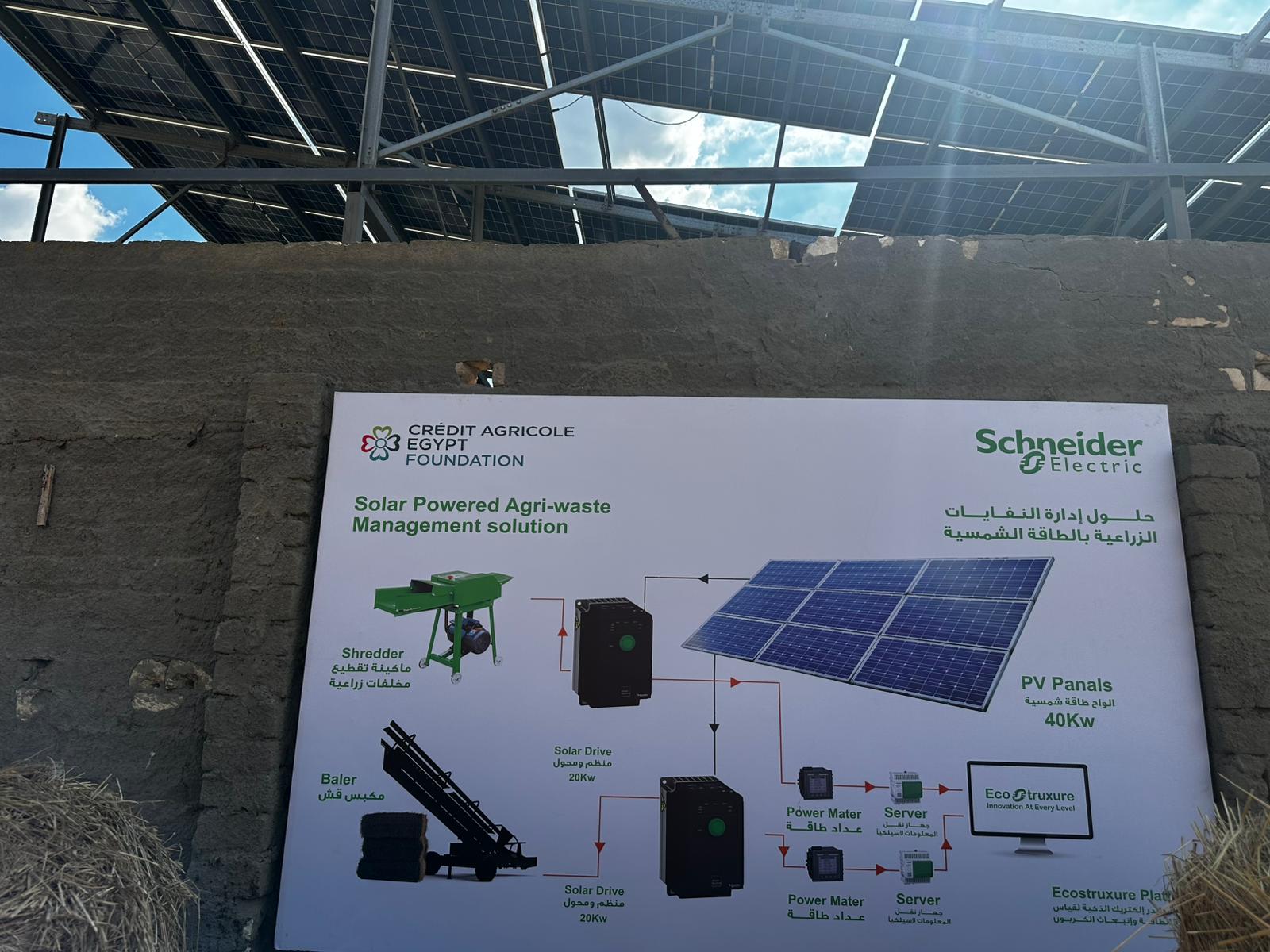
Key engineering choices include sizing each PV array to match the motor it drives for simpler operation, rooftop mounting of the compost system unit to save farmland, and hybrid operation so systems run on solar during the day and on grid electricity at night when needed. Sites and land were selected in close cooperation with local farmers to respect existing water-sharing schedules.
FROM BURNING STRAW TO NURTURING SOIL
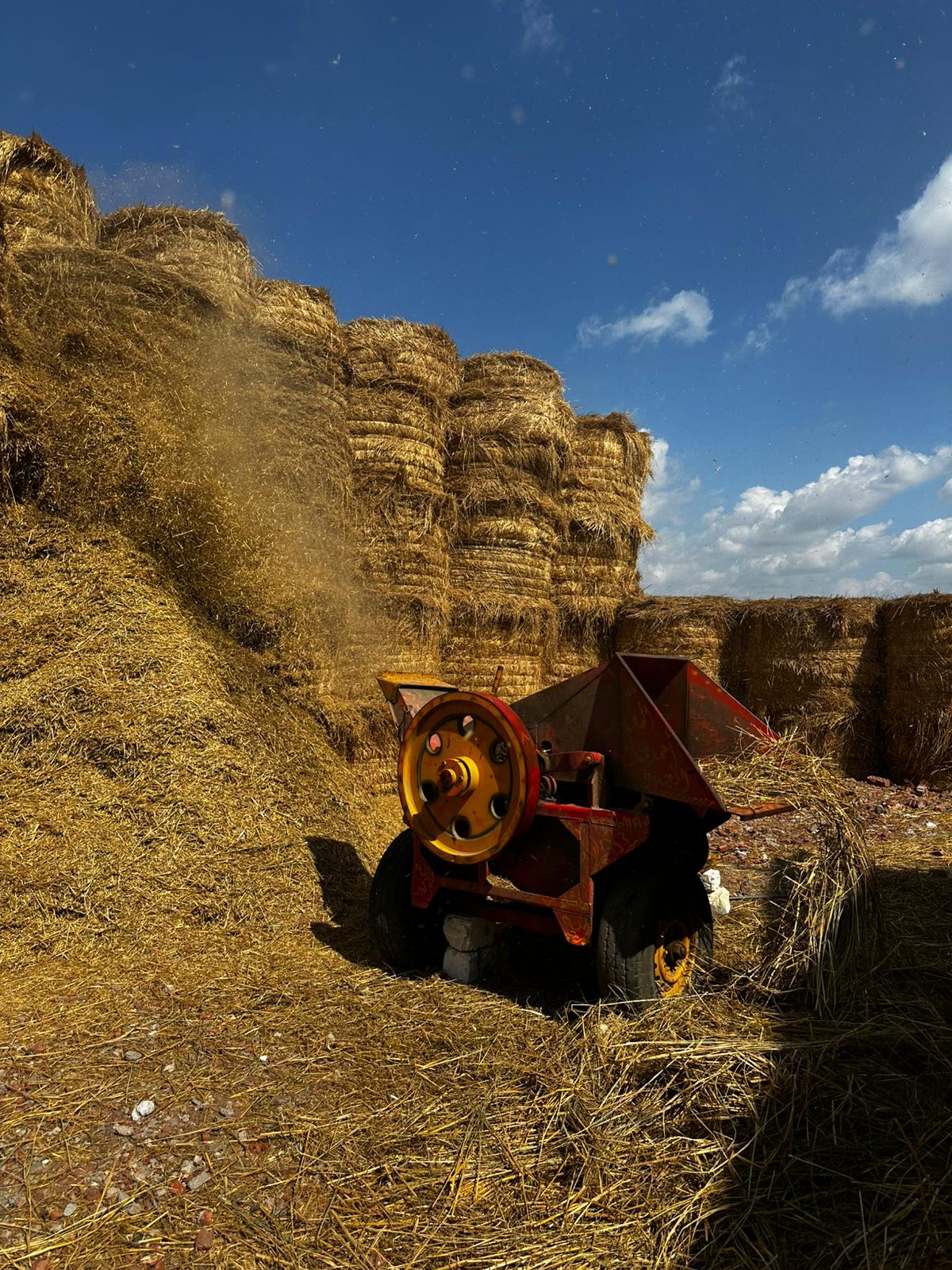
The solar-powered shredder and baler convert rice straw into organic compost and animal fodder. This stops open burning, improves air quality, and creates new income opportunities for the cooperative. The village has the potential to process thousands of tons of straw and capture real economic value from what used to be waste.
DELIVERING MEASURABLE OUTCOMES
- Each sakia saves about 10,731 liters of diesel per year, valued at about 160,965 EGP per year.
- The Hados Drain pump saves about 21,462 liters of diesel per year, valued at about 321,930 EGP per year.
- The two sakias reduce roughly 29.3 tons of CO₂ per year. The water lifting unit reduces about 58.6 tons of CO₂ per year.
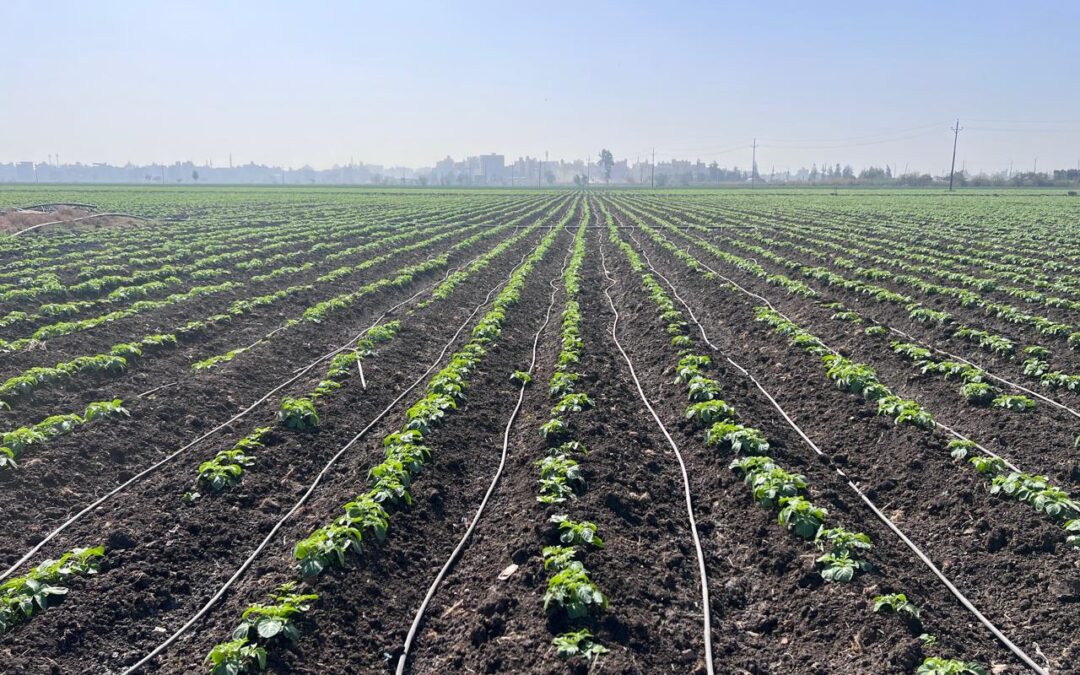
- Daily water delivery increased by thousands of cubic meters, expanding irrigated area and improving food production capacity.
TRAINING FOR SUSTAINABILITY
GEBAL formalised agreements with the Sadqa Agricultural Cooperative Association, selected local operators, and delivered hands-on training to community members, including local community leader Haj Saad. Operators use a WhatsApp group for fast troubleshooting and peer learning, which helps sustain the systems.
WHY DOES IT MATTER?
This integrated PV model shows how renewable energy, practical engineering, and local governance can improve water access, cut pollution, and support farming across remote villages. Funded by Crédit Agricole Foundation and Schneider Electric and implemented by GEBAL, the Sadqa project is a practical model ready for replication across Egypt.


0 Comments